OpenAI Launches ChatGPT Wallet So Its Agents Can Pay for You
Shoppers approve every purchase with a security check such as Face ID, and stores need no new integration, but a strict firewall or fraud filter can still turn agents away.

OpenAI launched ChatGPT Wallet on 13 November, a way for its dots agents to pay for things on your behalf on the same store websites and checkout pages that human shoppers already use.
So if you sell online, an AI agent may soon be the one at your checkout.
At launch it’s small. It’s rolling out to a limited number of ChatGPT Pro subscribers in the US, aged 18 and up, with eligible US-issued cards.
The Verge adds a US billing address and lists those cards as American Express, Chase, Mastercard and Visa.
How a purchase works
Here’s the flow, as OpenAI describes it:
- You add a card once.
- You ask your dot to buy something.
- You see the items, total and card, then pass a security check such as Face ID, every single time.
- The card network (OpenAI built this with American Express, Mastercard and Visa) swaps in a payment token: a stand-in card number with its own security code and expiry date.
So neither the store nor the agent ever sees your real card, and OpenAI says you keep your card rewards and protections for eligible disputes.
Is full autopilot coming? Over time, OpenAI expects so, within limits you set.
This is OpenAI’s second try. The Decoder reports it scrapped Instant Checkout, its first in-chat buying feature, because it wasn’t flexible enough.
Rivals got there first. Anthropic’s Claude Duet, Meta’s Muse and xAI’s Grok Bot already pay for things, the same report says, and Google and Perplexity have their own checkout tools.
What stores have to do
On paper, very little. Payments run through the checkout you already have.
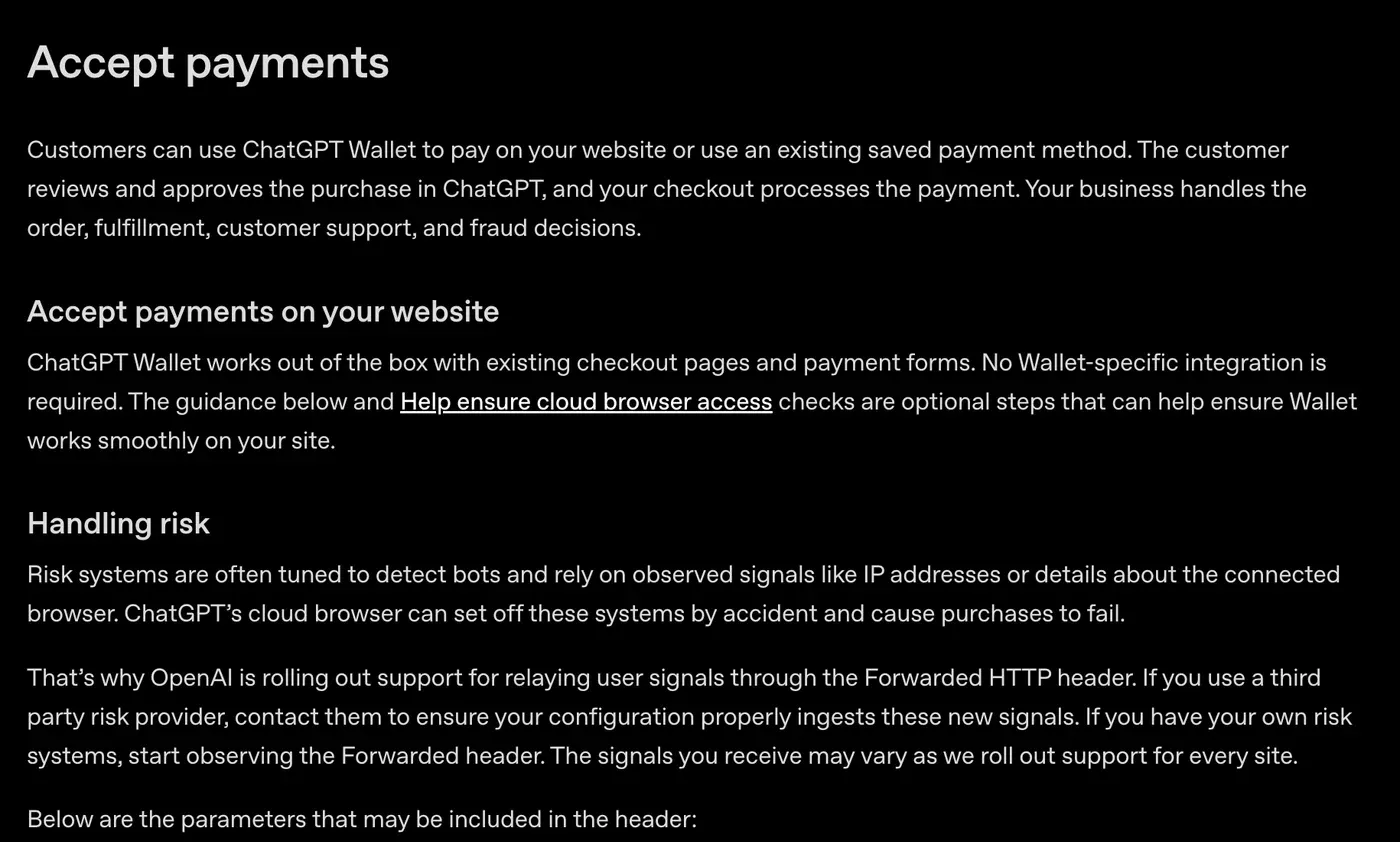
The catch is blocking. OpenAI says sites must make sure agents aren’t shut out by accident, and that fraud systems need to recognise real agent purchases.
Some shops block on purpose. Amazon is the largest retailer that bans AI agents, TechCrunch reports.
So what does OpenAI want? Its new Commerce Partner Playbook lists four jobs.
- Claim your business in ChatGPT and upload a product feed with current prices and stock (here’s our story on business profiles in ChatGPT).
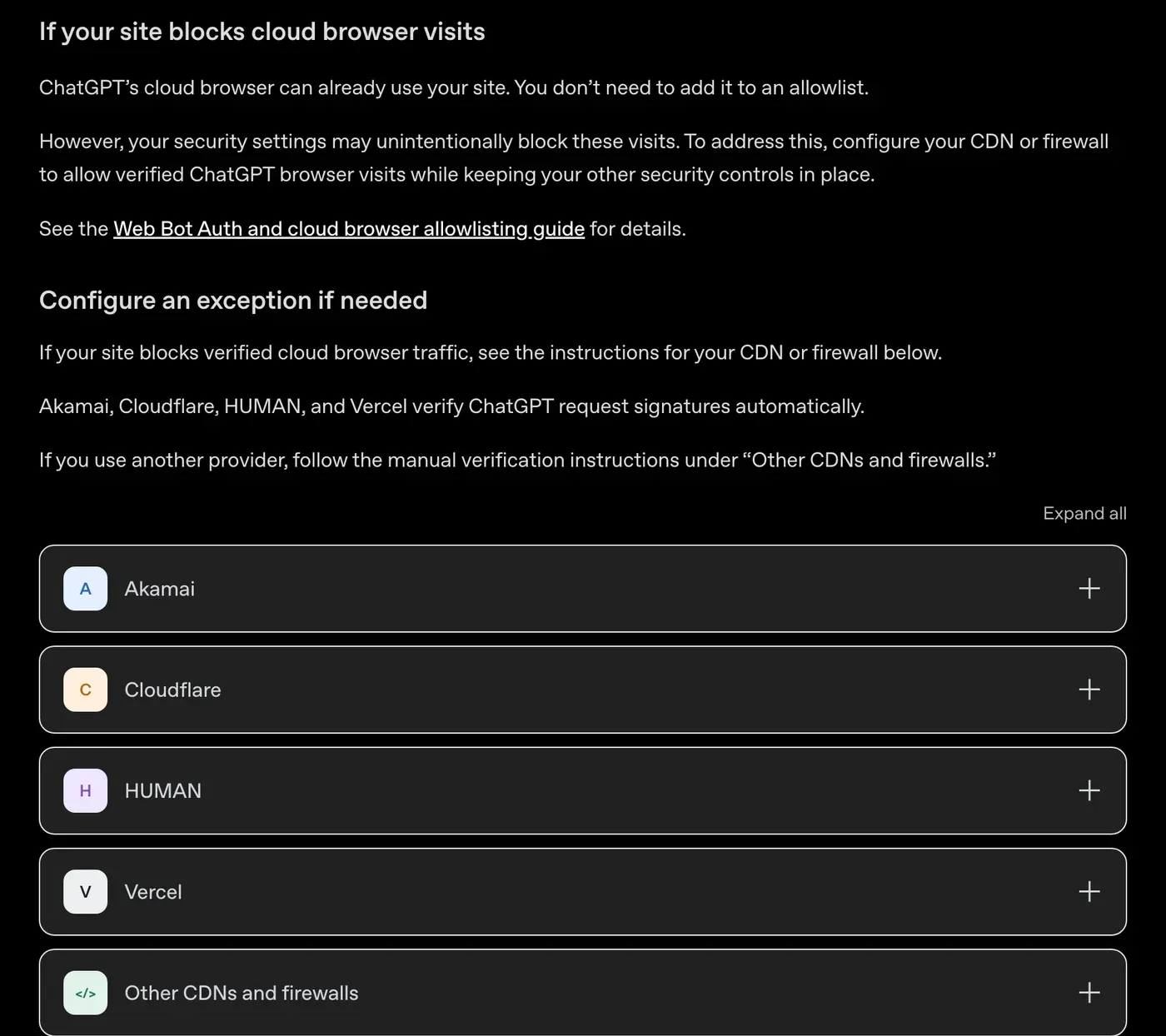
- Let your CDN or firewall recognise signed ChatGPT requests through Web Bot Auth.
- Ask your payment and fraud providers how they treat agent purchases, since OpenAI says it’s working with firms including Stripe, Adyen, Checkout.com, Forter, Riskified, Sardine and Signifyd.
- Optionally, build a plugin or add WebMCP tools so agents can check stock or manage carts.
What we checked
On 14 November we read OpenAI’s Accept payments guide, which says no Wallet-specific integration is needed and that you get a network token you mustn’t reuse for another purchase.
OpenAI is also rolling out shopper signals in a Forwarded header, for fraud tools.
The Agent Access page says Akamai, Cloudflare, HUMAN and Vercel verify ChatGPT’s signatures automatically, and sites on any other CDN or firewall get manual steps.
Its FAQ admits site owners can’t yet control which actions ChatGPT users take on their sites, though OpenAI requires human review before any consequential action.
We also loaded ChatGPT’s public signing key directory. It answered with one Ed25519 key, set to expire on 21 November.
Why it matters
If you run a store, the bigger risk this week is blocking agent sales without knowing it. These shoppers already approved the order.
Bot rules and fraud filters were built to stop scripts, and OpenAI’s own guide says ChatGPT’s cloud browser can set them off by accident and make purchases fail.
So check two things.
First, on Cloudflare, set “dots, OpenAI” to Allow under Personal Agents, as OpenAI’s Agent Access page says.
Then ask your fraud provider how it scores purchases from ChatGPT’s cloud browser. And watch your declined orders over the next few weeks.
Still, keep it in proportion. Uber counted four rides booked by AI agents.
My read: that key expires within a week. Fetch the directory, never hard-code it.
Will shoppers trust an agent at your checkout? I think the security check on every purchase is what earns trust here.
Though I’d want to see the failure rate first.
Common Questions
Do online stores need to integrate with ChatGPT Wallet to accept payments from it?
No. OpenAI’s Accept payments guide says no Wallet-specific integration is needed, because payments run through the checkout you already have. Stores should still check how their fraud provider scores purchases from ChatGPT’s cloud browser.
Does a store see the shopper’s real card number when ChatGPT Wallet pays?
The card network swaps in a payment token: a stand-in card number with its own security code and expiry date. So neither the store nor the agent ever sees the real card, OpenAI says.
Who can use ChatGPT Wallet right now?
It’s rolling out to a limited number of ChatGPT Pro subscribers in the US, aged 18 and up, with eligible US-issued cards (The Verge adds a US billing address). OpenAI says it will expand access after learning from early use. It gives no date.
Sources
- Introducing ChatGPT WalletOpenAI (opens in a new tab)
- ChatGPT Wallet lets OpenAI’s Dots agents make purchases for youThe Verge (opens in a new tab)
- ChatGPT's new Wallet lets AI agents shop and check out for youTechCrunch (opens in a new tab)
- OpenAI rebuilt AI shopping from scratch with ChatGPT WalletThe Decoder (opens in a new tab)
- Accept paymentsOpenAI Developers (opens in a new tab)
- Help ensure cloud browser access to your siteOpenAI Developers (opens in a new tab)


