OpenAI Launches Business Profiles and Agents in ChatGPT
Claiming gets you a blue check, real ChatGPT numbers and, for some US sellers, an agent that talks for you. It doesn't buy you a better ranking.

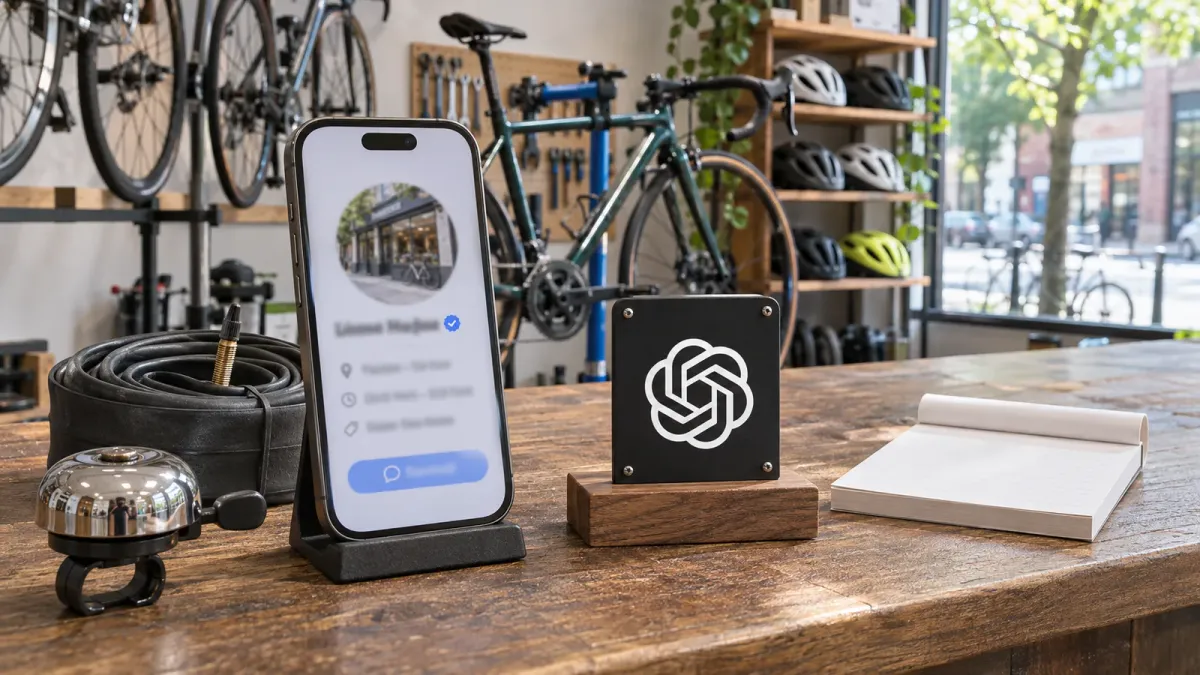
OpenAI has launched Businesses in ChatGPT, a beta that lets you claim your business in ChatGPT, fix what it says about you and see how often it mentions you to its 1.2 billion weekly users.
Eligible US ecommerce and online service businesses can also publish a Business Agent, a branded chat that answers shoppers for them.
It went live on 10 November.
On 8 November we reported a banner for ChatGPT’s mention and click charts that OpenAI hadn’t announced, and now OpenAI has announced it with far more than the banner showed.
Who can claim your business in ChatGPT
Claiming happens in Business Hub, and who gets in depends on the kind of business:
- Any eligible business where ChatGPT is available, which Trending Topics notes includes Europe.
- Local stores and restaurants: only an existing US listing for now, VentureBeat reports.
- Enterprise customers and advertisers: through their OpenAI rep.
So the profile isn’t US only. But OpenAI’s claim page says claiming starts with businesses that have a website.
Verification has two steps.
First you prove the business is yours, using a business phone number, email address, website domain or Shopify account, depending on the business.
Then the person managing the listing passes a Persona identity check, and only after that can you edit the profile, add a product feed, see analytics or build an agent.
The blue check appears at the same point. What can you change?
- The About section, contact details, website and opening hours, Inc. reports.
- For retailers, a product feed with prices and stock.
- A Shopify connection, made from Business Hub or the Shopify admin, so those product details sync on their own.
Changes aren’t instant. OpenAI reviews each one before it goes live, Search Engine Watch notes, and updates can take time to reach answers.
What the Business Hub numbers count
The Business Hub dashboard shows mentions, profile views, website clicks and discovery topics, which are the themes of conversations where ChatGPT cites your site as a source.
A mention doesn’t mean the same thing for every business.
How a mention counts depends on the kind of business you run:
- Online business: a mention counts when ChatGPT references your website.
- Local business: a mention counts when ChatGPT shows a result for your location, even if the person never opens it.
Just naming your brand doesn’t count, an OpenAI spokesperson told Digiday.
Clicks count taps on links in ChatGPT, so visits and sales stay in your own analytics. Low counts may be held back for privacy.
It’s a beta. A blank figure can also just mean the data is still coming in.
How far back does it go? VentureBeat and Search Engine Watch say 28 days, while an ad exec who has the dashboard told Digiday its chart shows 7 or 28 days.
OpenAI declined to say how long mentions are tracked. It also keeps three things back.
- Your customers’ chats with ChatGPT, and your agent’s chats.
- The prompts that named you.
- Share of voice, which a spokesperson said isn’t part of this beta.
Business Agents and the rules they follow
A Business Agent answers from the instructions and product feed you give it. You can’t bring your own bot, OpenAI’s Benji Shomair told Digiday.
When your business shows up in an answer, a user can open your profile and start a separate, labelled chat with your agent, kept apart from ChatGPT’s own answers.
Checkout stays with you. Purchases, bookings and order checks still happen on your website.
The Next Web says OpenAI is building agent payments with Visa.
OpenAI’s Business Agents Policy sets the rules every agent has to follow.
- It must say it’s AI representing the business, never a human or an independent adviser.
- No invented prices, stock, reviews or guarantees, and no hidden fees.
- No pressure, no false urgency and no pushing after a “no”.
- No sharing a user’s details, or submitting a form, booking or purchase, without their explicit approval.
Then there’s the ad tie-in. You can sponsor your agent and make it the destination for ChatGPT Ads, building on Sponsored Agents, which OpenAI began testing in September.
It’s still a limited test, VentureBeat says.
Does any of this lift your organic spot? Claiming a business “should not have an impact on how frequently it appears,” Shomair told Digiday.
OpenAI’s own pages don’t mention a price. Digiday reports that Business Hub and Business Agents are free for now, with a paid model not ruled out.
OpenAI’s plan from here: more markets, more categories and tools for complex organisations.
What we checked
We checked three things on OpenAI’s own pages on 12 November.
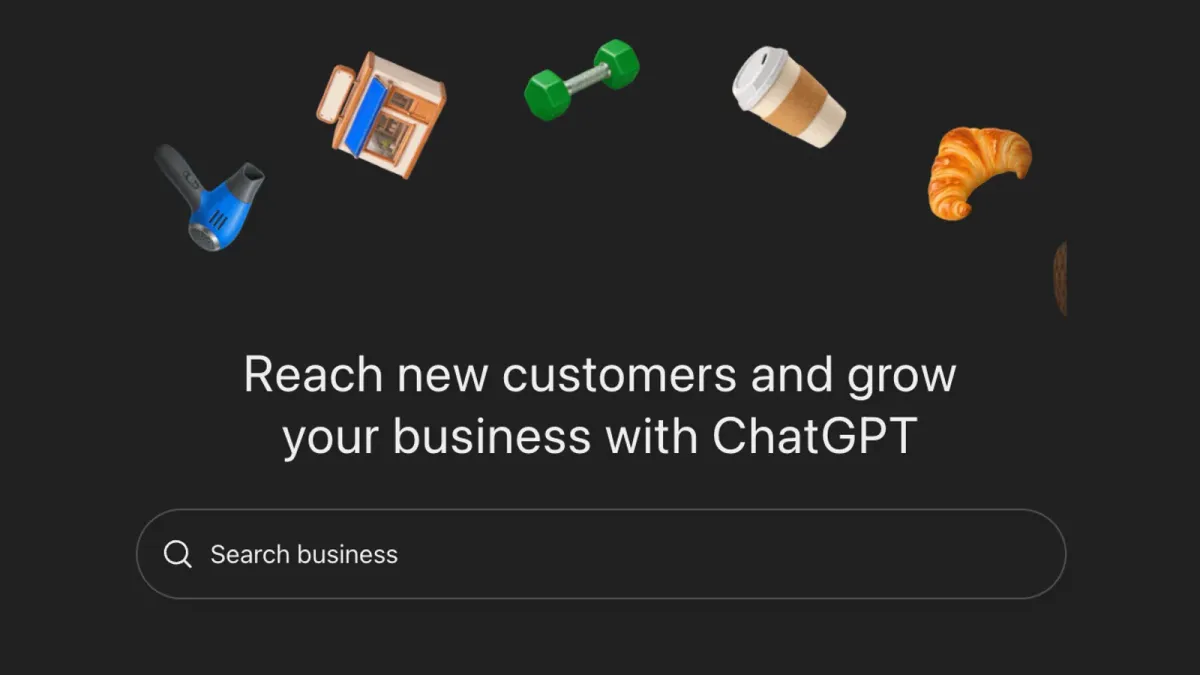
- The claim flow: signed in, Business Hub shows one Search business box and a footer saying that continuing accepts OpenAI’s terms. We stopped there.
- Price: neither the claim page FAQ nor the Business Agents Policy states one.
- Extra rules: the policy, dated 10 November, bars agents from asking for health details, government IDs or login details, and from advice that legally needs a licence.
The launch coverage we read didn’t mention those extra agent rules.
Why it matters
Trending Topics compared this to Google Business Profile plus Search Console, and I agree, because it pairs a profile you control with first-party numbers on how people find you.
But no Google tool lets a brand agent answer the shopper for you.
My read: claim your business in ChatGPT this week, even if you never build an agent. Do it now.
Anyway, the work splits by who you are.
- Online shops: claim, connect your feed and check every price and policy.
- Marketers: put Business Hub clicks next to the Direct bucket in GA4. Some ChatGPT visits can land there with no source.
- Creators and SaaS founders: a mention counts only when ChatGPT references your website, so your own pages need to say plainly what you sell.
Using a GEO tool like Peec AI or Profound? Keep it.
Business Hub covers ChatGPT only, with no prompts and no competitor view, so the tools that track Gemini, Perplexity and AI Overviews alongside ChatGPT still earn their place for now.
Still, when the two disagree about ChatGPT, I’d believe OpenAI’s numbers.
No source answers how a service-area business with no storefront or website gets in.
Nor does any say when local claims open outside the US, or whether councils and charities qualify.
Treat all three as a wait.
Common Questions
Is Businesses in ChatGPT free?
Digiday reports that Business Hub and Business Agents are free for now. OpenAI didn’t rule out charging later, and its own pages, including the claim page FAQ and the Business Agents Policy, don’t mention a price at all.
Can I claim my business in ChatGPT outside the US?
Yes. Any eligible business where ChatGPT is available can claim a profile, though local stores and restaurants can only claim an existing US listing for now, and Business Agents are limited to eligible US ecommerce and online service businesses.
Will claiming my business get me recommended more?
OpenAI says no. Claiming doesn’t guarantee higher placement or sales, though Shomair told Digiday better information may help ChatGPT match you to more relevant questions.
Sources
- Introducing Businesses in ChatGPTOpenAI (opens in a new tab)
- Businesses in ChatGPT: Claim Your BusinessOpenAI (opens in a new tab)
- Business Agents PolicyOpenAI (opens in a new tab)
- OpenAI's new business agents give brands a free way into the conversation it's also selling as an adDigiday (opens in a new tab)
- OpenAI lets you claim your business in ChatGPT and set up a custom agentic AI customer sales repVentureBeat (opens in a new tab)
- ChatGPT lets you claim your business and track the clicks it sends youSearch Engine Watch (opens in a new tab)
- OpenAI lets businesses claim ChatGPT profiles and launch their own agentsThe Next Web (opens in a new tab)
- OpenAI adds verified business profiles and AI agents to ChatGPTQuartz (opens in a new tab)
- Small Businesses Can Now Claim a Free ChatGPT Profile to Reach Customers. Here's How to Set It UpInc. (opens in a new tab)
- ChatGPT Takes On GEO Startups With New Business HubTrending Topics (opens in a new tab)


